TriNet North Star Vision
A comprehensive blue sky vision for TriNet's enterprise HR platform — reimagining the end-to-end experience across onboarding, time off, payroll, customer support, billing, and the unified dashboard.
The vision
TriNet's platform had evolved over years of acquisitions and incremental feature work. The result was functional but fragmented — workflows that should feel seamless required too many steps, too many screens, and too much context switching. As the UX team, we asked: what would this platform look like if we designed it from scratch today?
This North Star vision was a comprehensive reimagining of the platform — spanning client onboarding, new hire onboarding, time off, payroll, customer interactions, billing, and the unified dashboard. It wasn't a redesign to ship next quarter, but an aspirational target to guide every product decision going forward. Here are three of the areas I want to highlight.
Time off — from both sides
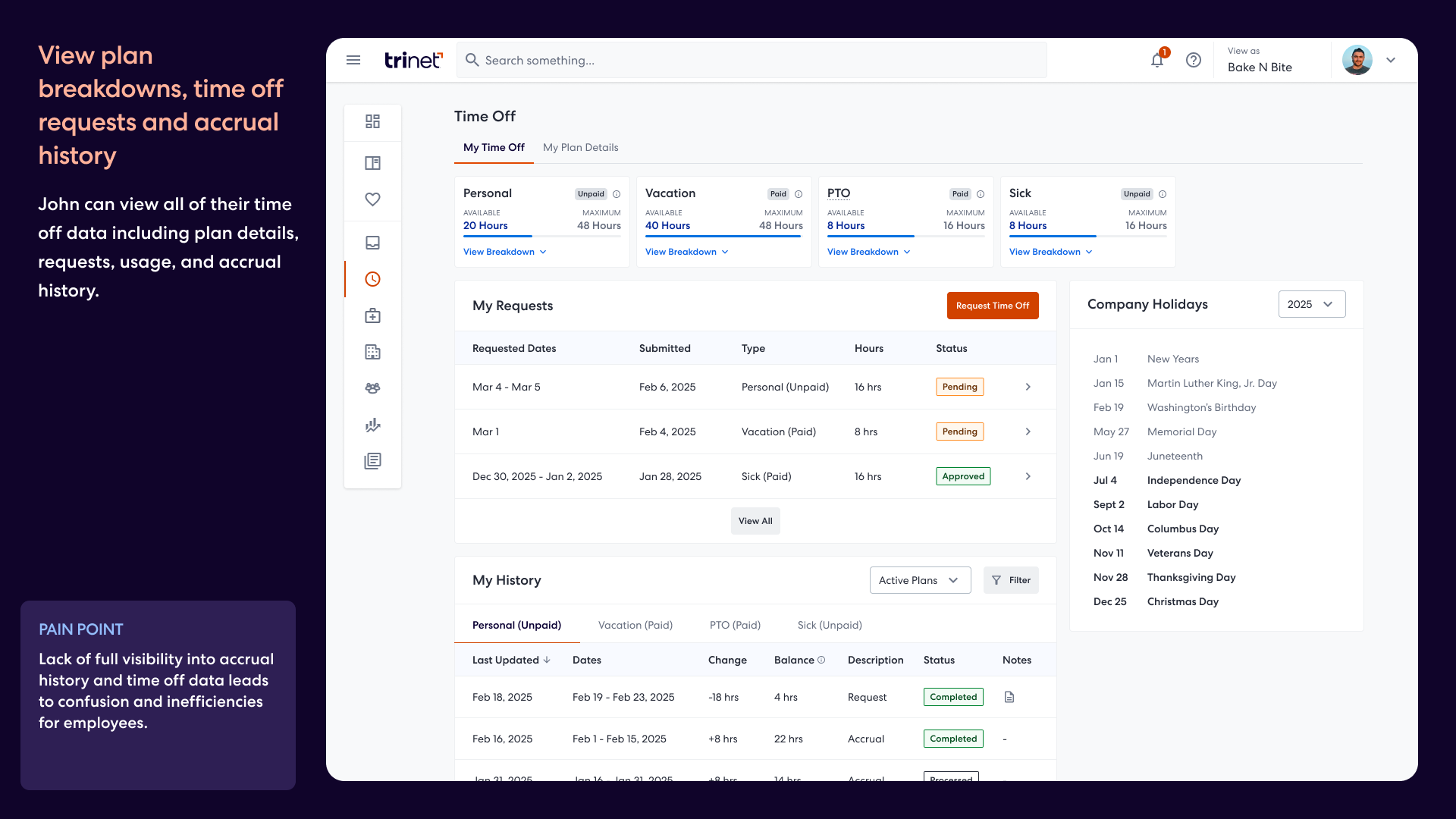
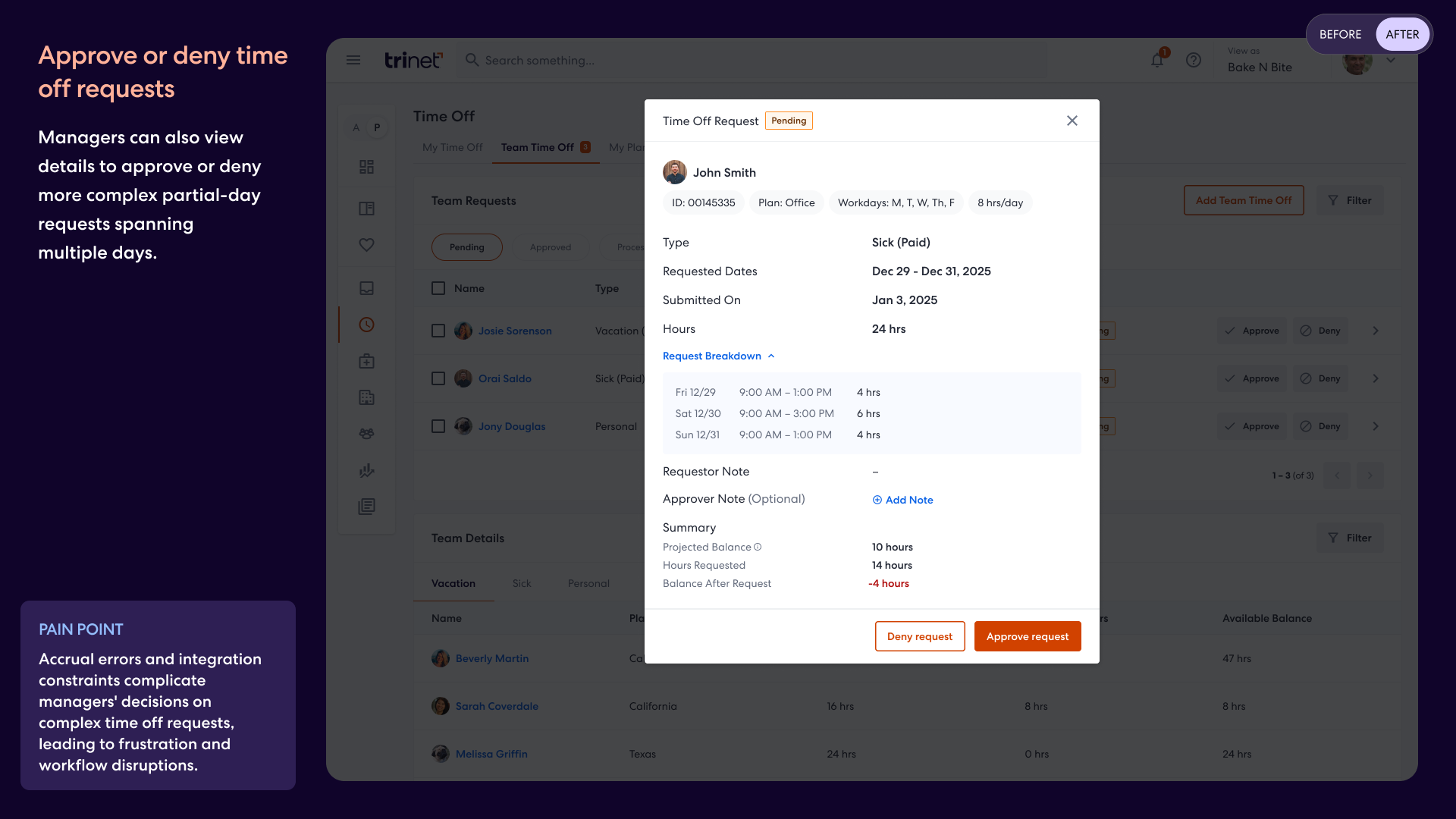
The existing time off experience lacked visibility. Employees couldn't easily see their accrual history, plan breakdowns, or request status in one place. Managers dealt with a disjointed approval flow that made it hard to review team requests alongside balance data. The integration with the backend system obscured team accrual data and complicated the approval process.
We reimagined it as a single, unified view. Employees get a clear dashboard showing all their plans — personal, vacation, PTO, sick — with available and maximum hours, pending requests, and full accrual history. Submitting a request is a simple modal with projected balance shown upfront. Managers see their team's pending requests with one-click approve and deny, plus full team balance details organized by plan type.
Payroll — clarity for admins
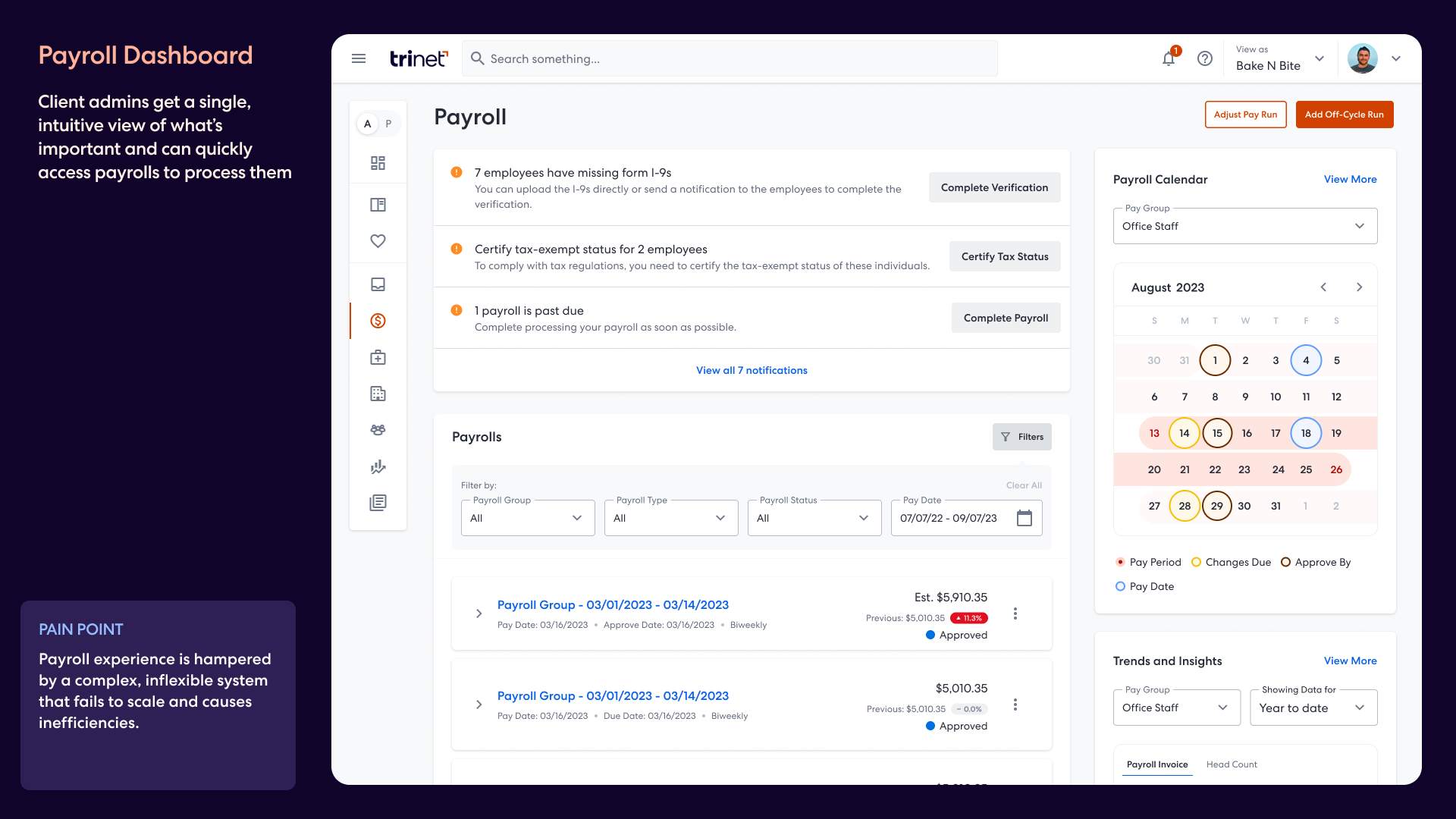
Payroll was the most complex workflow on the platform, and the experience reflected it. Client admins dealt with a system that was inflexible, hard to scale, and buried critical notifications under layers of navigation. Missing I-9s, tax-exempt certifications, and past-due payrolls were easy to miss.
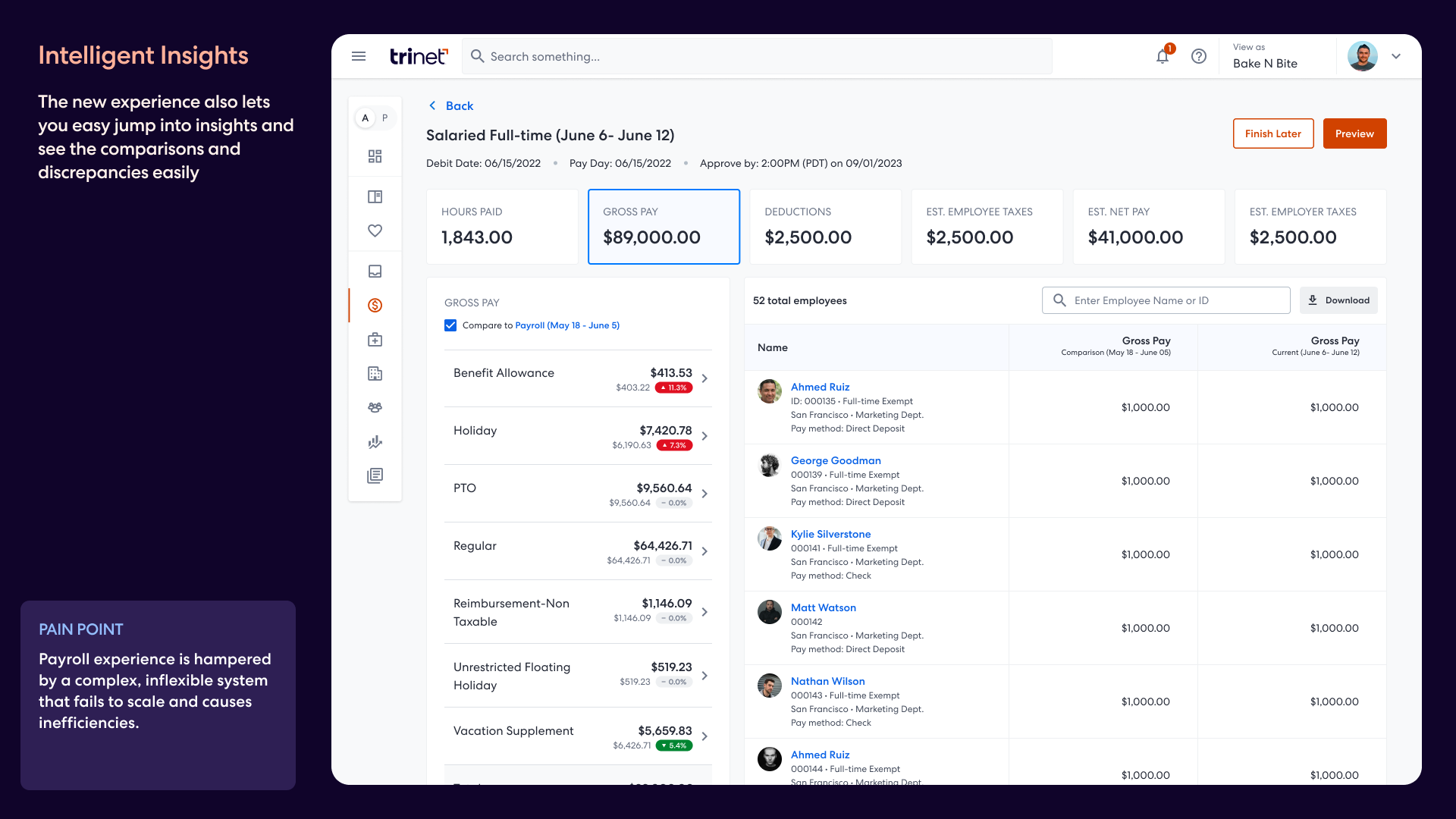
The North Star reimagines payroll as a single command center. Admins land on a dashboard that surfaces what matters: actionable notifications at the top (missing forms, pending approvals, past-due payrolls), a payroll calendar showing pay periods and deadlines, and trends and insights for their payroll group. Processing payroll uses an inline editing experience — a spreadsheet-like data grid where admins can adjust hours, rates, and deductions without leaving the page.
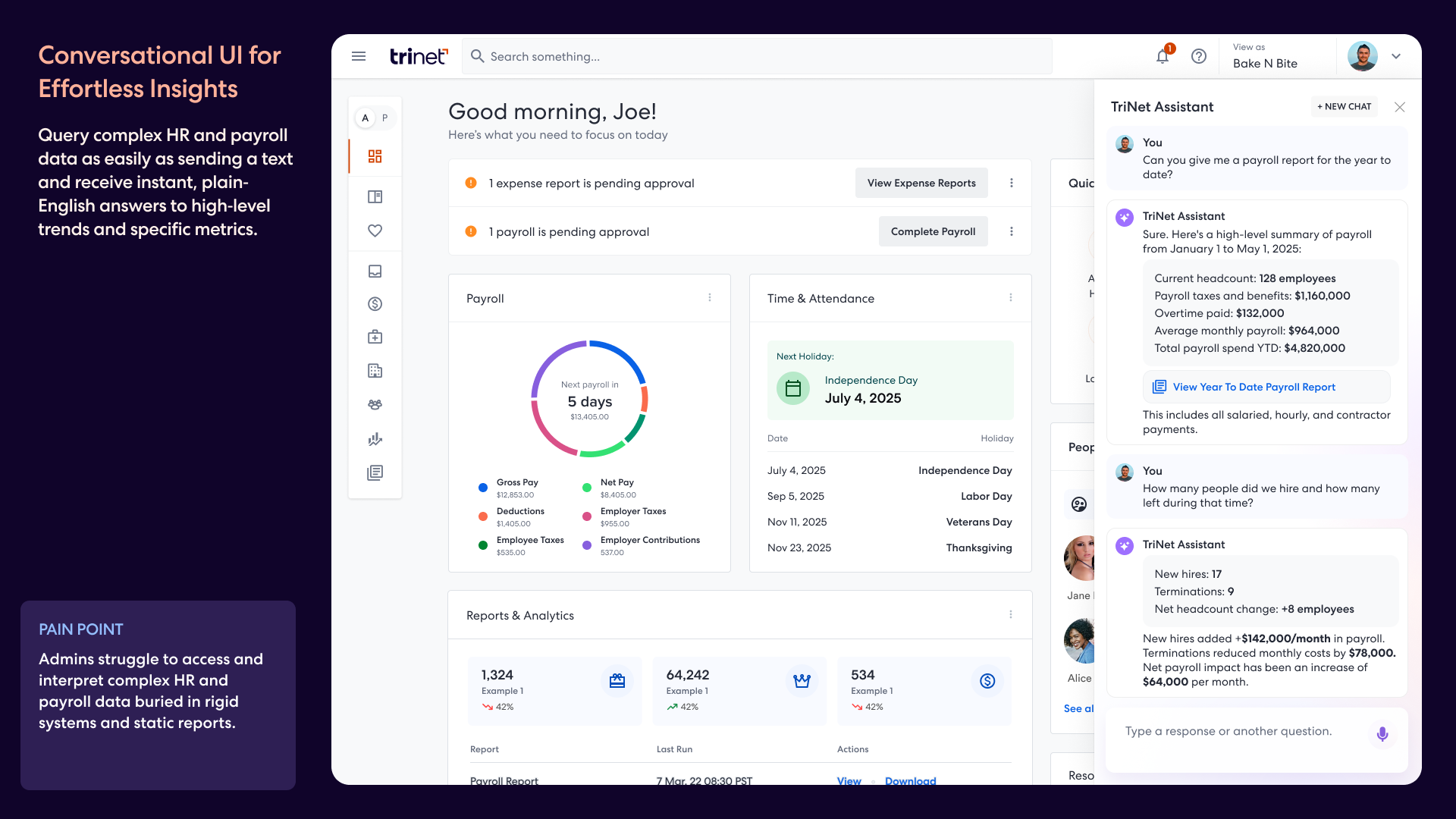
Customer interactions — AI that acts
Customer support interactions on the platform were transactional and slow. Admins who needed to make a routine change — like adding a new office location — had to navigate menus, find the right form, or open a support ticket. The process was manual, time-consuming, and pulled people out of their actual work.
We envisioned a conversational AI assistant that doesn't just answer questions but actually executes tasks. An admin types "I need to add a new address for Bake N Bite" and the assistant walks them through it step by step — collecting the details, confirming accuracy, and completing the change. Then it proactively offers related resources, like the benefits guide for that new location. Real assistance, not just search results.
What this work achieved
The North Star vision spanned the full platform — from client onboarding and new hire experiences through billing and the unified dashboard. It gave the entire product organization a shared picture of where we're heading and shifted conversations from "what feature do we build next" to "how does this move us closer to the vision."
Design, product, and engineering now have a common reference point for evaluating roadmap decisions. Several elements have already started influencing production work — and the conversational AI patterns from the vision directly shaped the AI unification project that followed.